Step 1, Prime the Grinder and Grind the coffees:
Clear out any remaining grounds form another coffee. It is essential step to have a clean grinder, with no elements from previous coffees in order to have an objective result of the cupping.
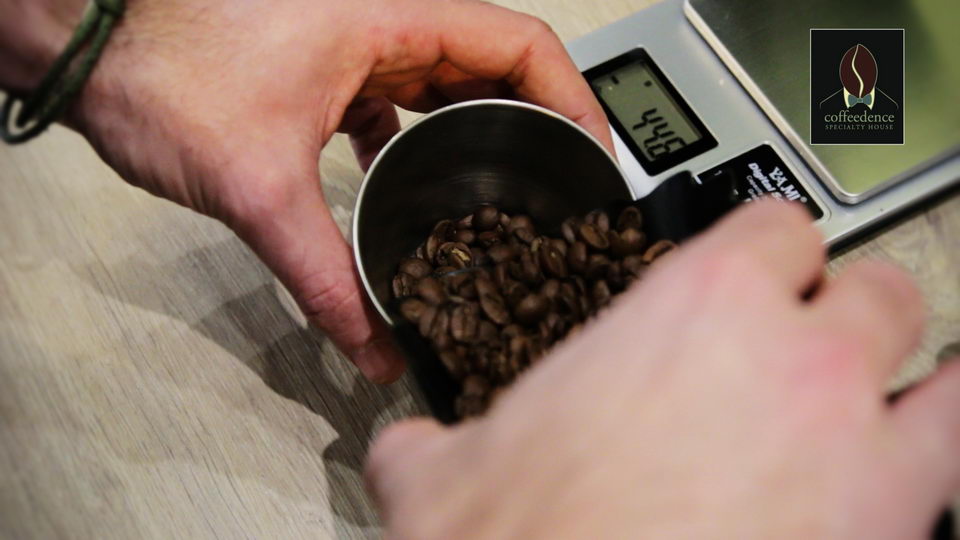
Weight out 10gr of each coffee and grind them at a medium coarse setting (between a Pour Over and a French Press grind). You should grind 2 samples of each coffee variety. Remember to prime the grinder between grinding each variety. Label the cups with the names of each coffee.
Step 2, Smell:
Take a whiff of each dry coffee sample with your mouth open. In that way, more aromas are being brought to your palate.
The cupping form that we use includes descriptors that we’ve grown to understand and use as our common sensory language. A vocabulary that’s evolved continued cupping.
In order to exercise new members of our team and evolve our knowledge regarding the sense of smell, we commonly use the Le Nez du Café, by Jean Lenoir, an olfactory alphabet that contains a collection of aromas and is designed to educate an amateur, a connoisseur or a professional.

Here are some examples:
Trees: cedar, redwood, holly, pine, fir
Chocolates: dark, white, milk, waxy
Flowers: jasmine, rose, lilac, honeysuckle
Nuts: peanuts, almonds, hazelnuts, walnuts
Fruits: bananas, blueberries, strawberries, honeydew melon
Spices: black pepper, ginger, coriander, vanilla
Deeply Exquisite: Leather, soil
Step 3, Add Water and Smell:
In a kettle or a vessel that is used only for heating water, heat about 1,5lt water at 96Celcius Degrees. Slowly pour the hot water over each cup, to the same level. For your convenience, remember that for each of 10gr of coffee you should use 160ml of hot water. Let sit 3 to 4 minutes.
Smell each sample again and try to identify the differences and similarities of the aromas of the dry coffee.

Step 4, Break and Remove the Crust:
Using two spoons and by doing a circle move, break through the coffee crust that has been formed on tom and traps most of the aromas. As you break the layer, inhale deeply. Scoop off the top crust. Be sure to rinse the spoons between coffees so you don’t cross-contaminate the samples.
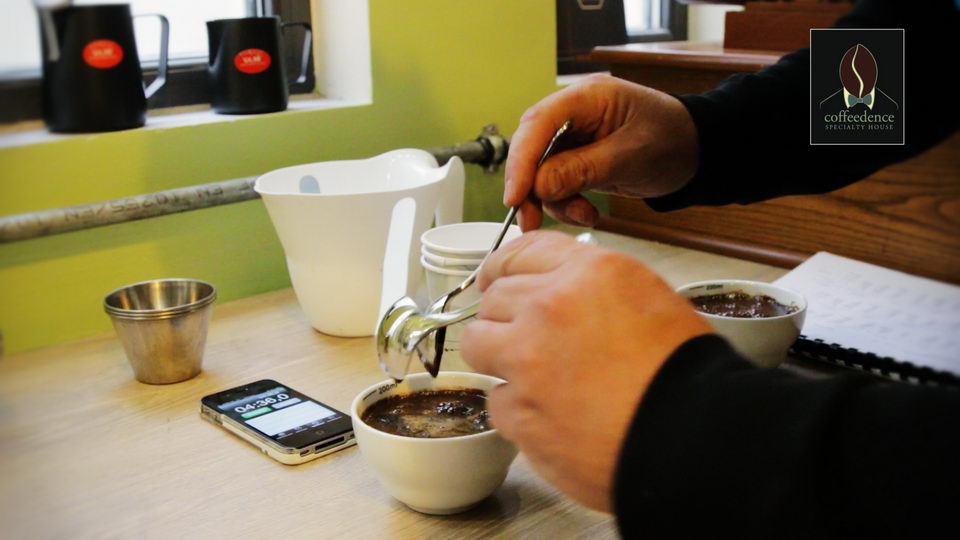
Step 5, Taste: Take a spoonful of coffee and slurp sharply. This aspirates coffee over your palate and helps bring in all of the flavors and aromas. Pay attention, compare and contrast, but don’t share your conclusions with others until they’re done tasting.


 English
 Ελληνικα